Cooking with lacto-fermented vegetables: the right habits
The right habits for cooking lacto-fermented vegetables: add them cold, balance the acidity, keep the crunch and use the brine, without complicating anything.
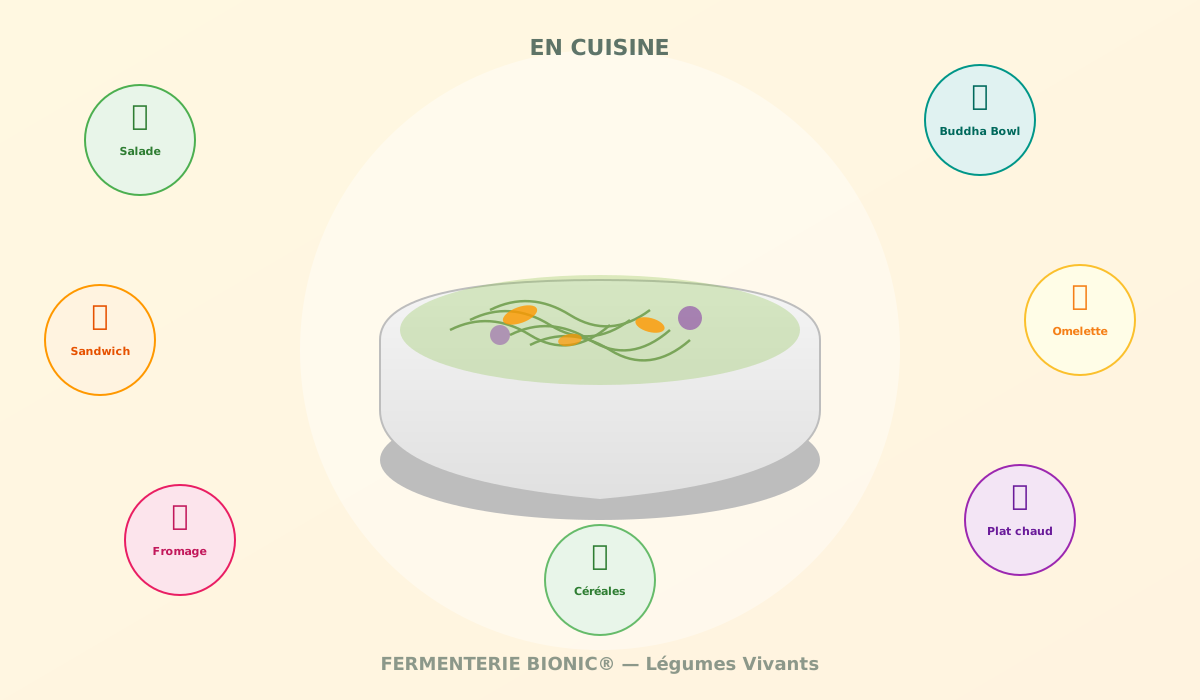
A lacto-fermented vegetable isn't only a side dish: it's a cooking tool. It brings four very useful things — acidity, crunch, salt and freshness. Used well, it transforms a very simple dish. Used badly, it disappears into the background or loses what makes it interesting.
The good news: there's nothing complicated about it. A few habits are enough. At BIONIC, our products are designed to fit into everyday life, with no technical recipe — a plate, a sandwich, a salad, a bowl, some potatoes.
Reflex no. 1 — add cold
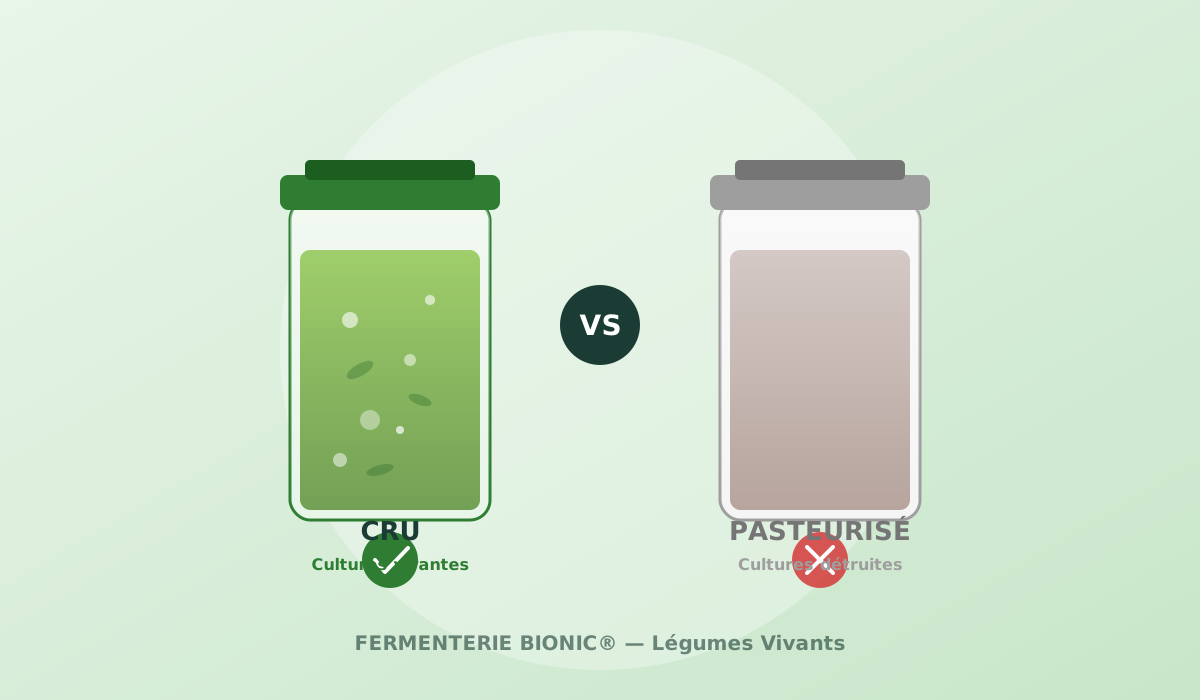
The most important thing comes down to a single idea: add the product cold, as a finishing touch. An unpasteurised lacto-fermented vegetable is at its best when it keeps its crunch and its freshness; prolonged heat softens the texture and dulls the acidity.
That doesn't mean avoiding hot dishes — quite the opposite. BIONIC works very well with them, as long as it's added at the last moment: on a plate of potatoes, beside a slow-cooked dish, on roasted vegetables, with eggs. The product can warm slightly on contact; it should not cook.
Reflex no. 2 — balance the acidity
A lacto-fermented vegetable already brings acidity. So you need to build the dish around it, rather than adding it without thinking.
In a salad, cut back on the vinegar or lemon. In a sandwich, it can replace part of the pickles or the tangy sauce. In a rich dish, it plays the role of contrast. The right move: taste the dish first, add a small amount, then adjust. It's better to start with a little — a large quantity can make the plate too sharp.
Reflex no. 3 — keep the crunch
The crunch is a signature. To preserve it: add the product at the last moment, don't stir it into a sauce for too long, don't let it heat, drain it lightly if needed — and do not rinse it. Rinsing removes part of the taste; the juice is part of the product.
Reflex no. 4 — use the brine
The brine isn't waste: it concentrates salt, acidity and flavour. You can use it in a vinaigrette, a marinade, to lift a sauce, in a potato salad or as a sandwich base. But with measure: it's salty and tangy, a few spoonfuls are enough. (When it comes to storage, you always keep the vegetables in contact with their juice — see How to store lacto-fermented vegetables.)
Three mistakes to avoid
- Cooking them for a long time — you lose the crunch and the freshness.
- Adding too much — a lacto-ferment is an accent, not a base. A small portion is enough.
- Stacking acidities — vinegar, lemon, pickles and lacto-ferment together can make the dish aggressive.
Where to slip them in, in practice
These habits apply everywhere. For ready-to-use ideas for every day — a full plate, a sandwich, a bowl, an apéro, a quick meal — see our 7 simple ways to use lacto-fermented vegetables. And for the great Swiss classics (raclette, fondue, dried meat, rösti), the guide to BIONIC pairings.
When it comes to choosing: the carrot & white cabbage is the most approachable to start with, the red cabbage brings liveliness to a sandwich, the green cabbage is very versatile in a bowl. The Discovery Box lets you try all four.
The BIONIC reflex Cold · at the end of plating · a small portion · without rinsing · with a clean utensil. Five markers, and the product does the rest.
FAQ
Can you cook hot with BIONIC? Yes, but add the product at the end, off the heat, to preserve the crunch.
Do you need to drain it? Lightly, if needed. Do not rinse.
Can the brine really be cooked with? Yes — in a small quantity, in a vinaigrette, a marinade or a sauce.
Which recipe should you start with? The carrot & white cabbage is very approachable; the Discovery Box lets you compare the profiles.
In short
Cooking with lacto-fermented vegetables isn't about learning a complicated technique: it's about adopting a few habits. Add cold, balance the acidity, keep the crunch, use the brine with measure, think in contrast. BIONIC is made for this — to make meals more lively, without complicating them.