How to store lacto-fermented vegetables in the fridge
The practical guide to storing your lacto-fermented vegetables: on arrival, before and after opening, the brine, transport and the right habits.
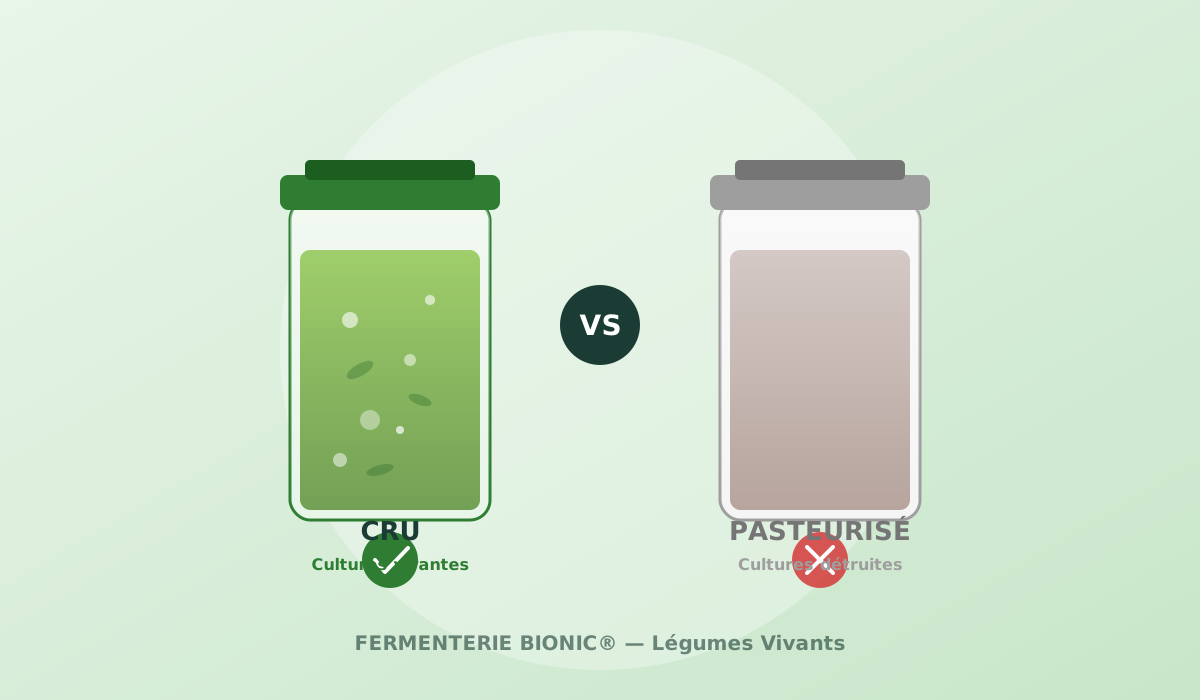
BIONIC lacto-fermented vegetables are fresh, unpasteurised products kept chilled. Storing them is simple, but it calls for a few good habits. They shouldn't be treated like a standard tinned preserve — nor made more complicated than they are.
The general rule comes down to a single sentence: keep chilled, reseal cleanly, use a clean utensil. These habits are enough to preserve the taste, the crunch and the consistency of the product.
Why the cold matters
BIONIC makes the unpasteurised choice: the product hasn't been heated to halt its evolution. It's a choice of taste and texture (we explain it in Unpasteurised products: what it changes).
The consequence: the cold isn't a logistical detail, it's part of the product. It keeps the acidity in the right register, preserves the crunch and holds the profile over time. At room temperature, a lacto-fermented product evolves faster: the acidity sharpens, the texture changes. The cold prevents this.
On arrival of your order
As soon as the parcel arrives:
- open it;
- check the products;
- place them in the fridge;
- keep them in their original packaging.
Don't leave the parcel waiting on the doorstep or on a worktop. Our orders ship in insulated packaging, but the right habit remains putting them in the cold quickly.
If a parcel arrives damaged, take photos and contact us with your order number — we'll find a solution. (Details on the FAQ & Delivery page.)
The right temperature
The fridge is the place for it. Favour an inner shelf rather than the door: the door is subject to greater variation with each opening.
To avoid:
- leaving the product out for the whole meal;
- forgetting it open on the table;
- freezing it;
- exposing it to sunlight;
- transporting it for a long time without a way to keep it chilled.
Before opening
Before opening, it's very simple: keep it in the fridge, respect the date shown on the packaging, don't decant it, don't open it "to let it breathe", keep the packaging intact. The product has been packed to stay stable within this framework.
After opening: three habits
1. Keep the product clean. Always use a clean fork or spoon. Avoid taking a serving with a utensil that's already been in a sauce, meat or cheese. A simple habit, but it protects the product.
2. Reseal carefully. After taking your serving, reseal the pouch or the jar depending on the format, and put it back in the cold quickly. Time spent out of the fridge matters, especially when it adds up.
3. Keep the brine. The liquid isn't waste: it protects the product and carries part of its taste. In a jar, keep the vegetables in contact with their liquid; in a pouch, reseal properly without discarding the brine. And don't rinse the product. (The brine even has kitchen uses — see Cooking with lacto-fermented vegetables.)
How long after opening?
The reference remains the date shown on the packaging. After opening, consume the product within a reasonable time, keeping it chilled and following the hygiene habits above. If a specific duration appears on the label or the product page, follow it.
The signs to watch
A lacto-fermented vegetable naturally has a tangy smell: that's normal and expected. What should raise a flag, on the other hand: a distinctly unusual smell, an abnormal appearance, a texture far removed from the expected product, or damaged packaging. If in doubt, don't force it — contact us.
Can you freeze it?
Not recommended. Freezing changes the texture and can break the crunch, which is precisely what makes the product worthwhile.
Transport after purchase
If you transport the product yourself, apply the same logic: limit time out of the cold, avoid heat, put it away in the fridge quickly, and use an insulated bag if the journey is long.
The BIONIC reflex With each use: take out the product, take a serving with a clean utensil, reseal, put it back chilled — and serve cold, as a finishing touch. Five steps, ten seconds.
FAQ
Should you keep the brine? Yes. It protects the product and carries part of the taste.
Should you rinse the vegetables? No. Drain lightly if needed, but don't rinse.
Can you store it in the fridge door? It's possible, but an inner shelf is preferable: the temperature there is more stable.
Can you freeze it? It's not recommended: the crunch may be spoiled.
What if the parcel arrives damaged? Take photos and contact us quickly with your order number.
In short
Storing BIONIC is simple: the cold, a clean utensil, packaging well resealed, the brine kept, regular use. These habits keep the product true to what it should be — fresh, crunchy, tangy, alive and ready to join the plate.