Unpasteurised lacto-fermented vegetables: what it changes
Why BIONIC doesn't pasteurise its lacto-fermented vegetables, and what that choice changes for flavour, texture, storage and delivery.
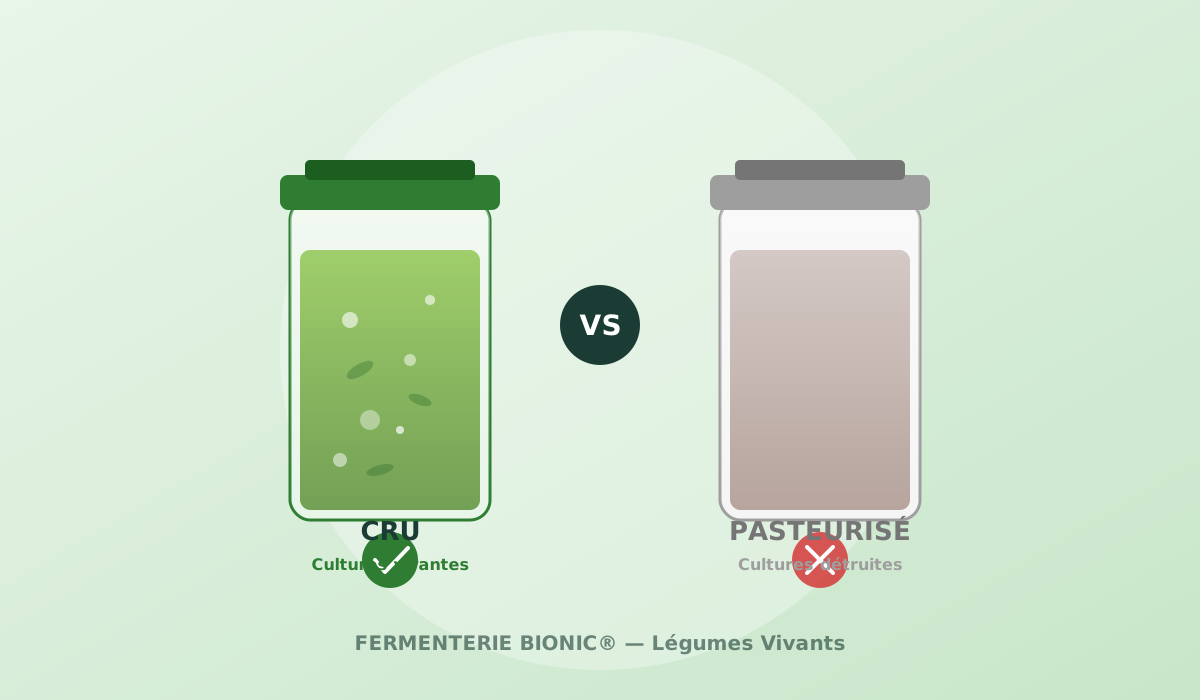
The word "unpasteurised" appears often on the labels of fermented products, but it's rarely explained. At BIONIC, it isn't a decorative mention: it's a central choice, one that shapes the flavour, the texture, the storage, the delivery and the way the product is used.
And contrary to what you might think, an unpasteurised product isn't difficult to live with. It simply calls for a clear logic: cold, precision, and respect for the product.
What is pasteurisation?
Pasteurisation is a heat treatment: the product is heated to make it more stable. In many cases that's useful — it simplifies storage, transport and long-distance distribution.
But for a lacto-fermented vegetable, that heat comes at a cost. It tends to alter the texture, dull the crunch, round off the acidity and freeze the product's profile. The vegetable then moves closer to a tinned preserve: softer, more muted, less sharp.
That isn't a flaw in itself. It's simply a different product, with different priorities.
Why BIONIC doesn't pasteurise
We've chosen the other path: not to pasteurise, and to keep the product chilled. This choice isn't a pose — it comes from the product itself.
A lacto-fermented vegetable owes its appeal to its freshness, its tension on the palate and its crunch. Heating it at length means erasing part of what the product was made for. (To understand what really happens inside the jar, see our article Lacto-fermentation explained without the jargon.)
What unpasteurised changes in the flavour
An unpasteurised product keeps a more direct expression. The flavour comes across as cleaner, fresher, more taut. The acidity stays present without being aggressive, and the cabbage retains a more vegetal character.
It isn't a spectacular or forced flavour. It's more a sense of a living product, more precise, less fixed. The aim isn't to be bold for the sake of being bold, but to hold a balance: acidity, crunch, freshness, depth.
What it changes in the texture
Texture is one of the big subjects. A BIONIC lacto-fermented vegetable has to keep its crunch — that's what makes you want to come back to it.
Pasteurisation, like cooking, softens vegetables and brings them closer to a more yielding product. Choosing unpasteurised lets us preserve that crisper texture, that presence under the tooth that makes all the difference on the plate.
What it requires: cold
An unpasteurised product has to be kept chilled. Cold isn't a logistical detail: it's part of the quality system. It slows the product's evolution and helps hold its profile over time.
In practice, that involves the whole chain:
- delivery in insulated packaging;
- refrigeration as soon as it arrives;
- respecting the date shown on the packaging;
- returning it to the cold after each use.
The product stays simple to live with, but it isn't treated like a tin from the cupboard. All the right habits are detailed in How to store lacto-fermented vegetables in the fridge.
What it requires: production
Unpasteurised doesn't forgive improvisation. You have to select the vegetables, work cleanly, track every batch, master the fermentation, pack cold and hold the cold chain from end to end.
It's more demanding in terms of organisation — and that's exactly what allows BIONIC to offer a fresh, coherent product. It's also what Nicolas, the founder, stands for: a living product, but a controlled one.
Unpasteurised doesn't mean a health promise
Let's be clear, because the subject is often muddled: choosing unpasteurised is first of all a product choice — flavour, texture, freshness, coherence. It isn't a health argument.
BIONIC doesn't present its products as supplements or as miracle products. The message stays about food and cooking. That's all, and it's deliberate.
Pasteurised or unpasteurised: the simple table
| Pasteurised product | BIONIC unpasteurised product |
|---|---|
| More stable at room temperature (depending on product) | Kept chilled |
| Texture often softened | Crunch more present |
| More fixed profile | Fresher, more taut profile |
| Simpler logistics | More demanding logistics |
| Use sometimes close to a tinned preserve | Used as a fresh ingredient |
The BIONIC reflex If you choose an unpasteurised product, treat it like a fresh ingredient: keep it cold, serve it cold, and enjoy it without heating it at length. That's the whole point of it.
Curious to taste that freshness? The simplest thing is to browse our recipes and pick a cabbage that speaks to you.
FAQ
Why doesn't BIONIC pasteurise its products? To preserve the flavour, the crunch, the freshness and the identity of the product, which heat tends to erase.
Is it more complicated to store? No. You simply keep it in the fridge and close it properly again after opening.
Can you cook an unpasteurised product? It's better to add it cold, or right at the end of plating alongside a hot dish, so as not to lose the crunch.
Is it a supplement? No. BIONIC is a fresh food, designed for flavour and everyday use — with no health promise.
In short
Choosing unpasteurised isn't about seeking a spectacular effect. It's about choosing a fresher, more demanding logic, one that's truer to the product. At BIONIC, this choice involves the whole chain: vegetables, fermentation, packing, cold, delivery and use at the table.
That's the price of a living product — Swiss, crunchy and well made.