Fermentation and seasons: why cabbage, and why now
Why cabbage is the ideal produce for lacto-fermentation, why a short, seasonal range, and what batch variation tells us about a living product.
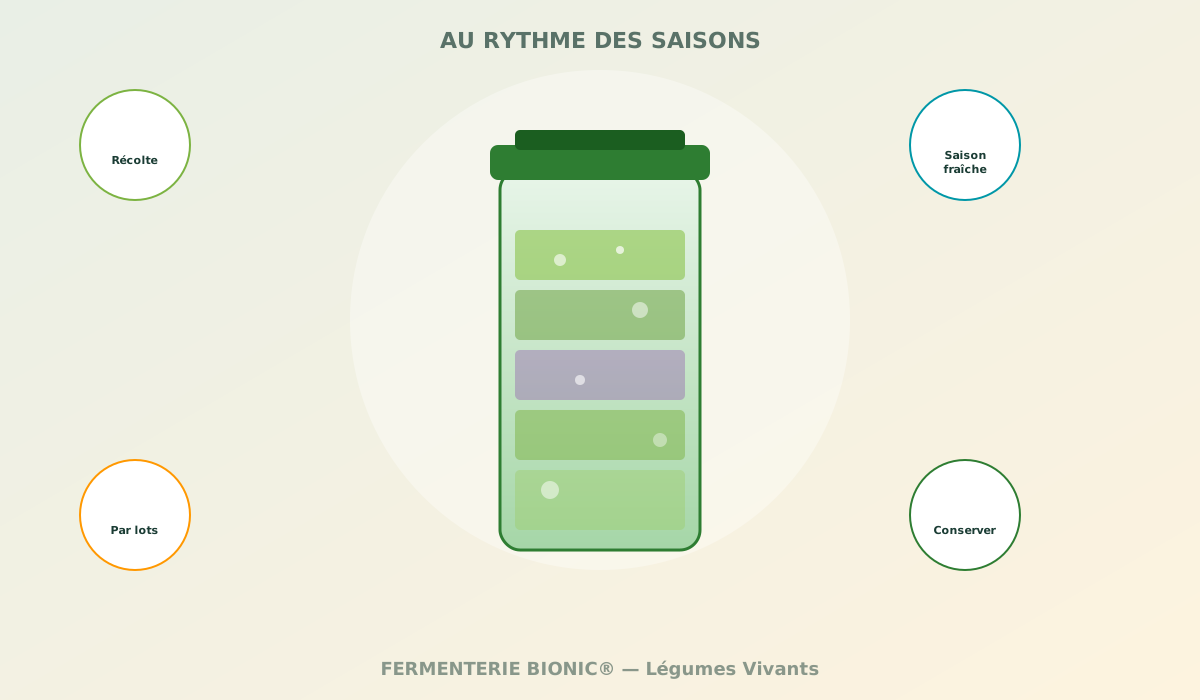
Fermentation is not a rootless technique. It comes from a very concrete relationship with the seasons. Before it was a fashionable subject, it was an intelligent way of moving through time: taking a vegetable at the right moment, transforming it with salt, letting it evolve, then keeping it for the months that follow.
At BIONIC, this logic remains central. We are not trying to produce an endless range all year round, but a short, legible range, built around vegetables that make sense for fermentation — cabbage in particular. (For the underlying mechanisms, see Lacto-fermentation explained without the jargon.)
Cabbage, a cool-season vegetable
Cabbage likes time. It gains density as temperatures drop: its leaves tighten, its structure strengthens, its taste becomes cleaner. That is precisely what makes it good produce for lacto-fermentation.
A cabbage that is too fragile or too watery gives a less interesting product. Fermentation does not turn an average vegetable into a great product — it reveals what the produce already holds. Hence the importance of choosing the right cabbage, which for us brings together several qualities: a firm texture, a real ability to keep its crunch, a natural affinity with salt, a long-standing place in Swiss cooking, and great versatility at the table.
A Swiss tradition brought into the present
Switzerland knows sauerkraut, cool-season dishes, mountain meals, potatoes, cheeses, simple plates. But fermentation has often been reduced there to a rather heavy image: a cooked, wintery, occasional side dish.
BIONIC offers another reading: a fresh, crunchy, precise lacto-fermented cabbage, ready to join the everyday table. This is not a step backwards — it is a tradition brought into the present. It is also the whole point of our founder: taking up an old gesture, without fixing it in place.
Fermentation extends the season
Lacto-fermentation was born from a simple need: to extend the best of a harvest. Salt, time and method allow the vegetable to transform; the product becomes more stable, more structured, more complex in taste.
At BIONIC, this old principle is worked with a contemporary rigour — selection of the vegetables, cutting, salting, monitored fermentation, cold packing, cool storage, careful delivery. The aim is not to produce a fixed food, but to preserve an identity: taste, crunch, acidity, freshness. (The detail of the process is on the method page.)
Why the range is short
A short range is a choice. We could multiply the recipes, the colours, the editions — but the wider a range grows, the more it risks losing in legibility.
BIONIC prefers four recipes with clear roles: an accessible one (carrot & white cabbage), a classic one (white cabbage), a more vegetal one (green cabbage) and a livelier one (red cabbage). The customer understands better, the product finds its way back into the fridge more easily, and production stays coherent. It is also a way of respecting the season: offering what is good now, rather than offering everything all the time.
What the season changes in the taste
A living product does not need to be perfectly identical from one batch to the next to be reliable. It must be consistent, clean, controlled — but it can keep small variations: a slightly different crunch, an acidity more or less taut, a sharper vegetal expression.
It is the opposite of a standardised industrial product. These variations are not a flaw: they are the signature of real produce. As with wine or bread, time and the produce matter.
How to live with a seasonal range
For you, it is simple: taste what is available, keep it cold, use it regularly, accept that a batch may have its own nuance, and come back to your favourite recipes. The Discovery Box is the right starting point for comparing the profiles, then choosing individually in the shop. The product should not become complicated — it should become a reflex.
The BIONIC reflex When a recipe is available, it is because it makes sense at that moment. Taste it, keep it cold, and let the season guide your choices.
FAQ
Why is cabbage so important at BIONIC? Because it is firm, versatile, rooted in Swiss cooking, and particularly well suited to lacto-fermentation.
Will the range change? It may evolve with the seasons, the batches and the produce available.
Is a variation in taste from one batch to the next normal? Yes, within reason: a living product can have slight nuances while remaining controlled.
Where should I start? With the Discovery Box, to taste the different expressions of cabbage all at once.
In short
Fermentation and seasons move forward together. Cabbage is at the heart of BIONIC because it belongs to our table, because it holds fermentation well, because it keeps its crunch, and because it tells the story of a Switzerland that is simple, precise and alive.
BIONIC does not aim to make things more complicated. BIONIC aims to « do it right, not complicated ».