Raw or cooked sauerkraut: what really changes
Raw lacto-fermented sauerkraut or cooked sauerkraut: differences in taste, texture and use, and how to serve raw sauerkraut the Swiss way.
In Switzerland, sauerkraut often calls to mind a hot dish: generous, slow-cooked, served with potatoes, meat, sometimes a sausage. A reassuring tradition, deeply rooted in our idea of winter meals.
But sauerkraut can also be something else. When the cabbage is worked raw, lacto-fermented and unpasteurised, kept chilled, it no longer plays the same role on the plate. It doesn't become a warm, meltingly soft base: it becomes a lively, crunchy, fresh, precise ingredient.
It doesn't necessarily replace cooked sauerkraut. It offers a different experience. And this is the reading BIONIC stands for: putting lacto-fermented cabbage back where it belongs — not as a heavy, occasional side dish, but as a fresh, everyday product.
Cooked sauerkraut: warmth, roundness, tradition
Cooked sauerkraut belongs to the logic of a dish. It is slow-cooked, woven in, rounded off by the heat and by what accompanies it. Its acidity softens, its texture relaxes, the cabbage melts into the whole.
That is exactly what we ask of it in a garnished sauerkraut: to carry a warm, rich, wintry meal, to bring roundness and comfort.
But this cooking erases part of the cabbage's freshness. The crunch disappears, the lively acidity fades, the vegetable becomes more discreet. This isn't a flaw — it's simply a different use.
Raw sauerkraut: crunch, freshness, tension
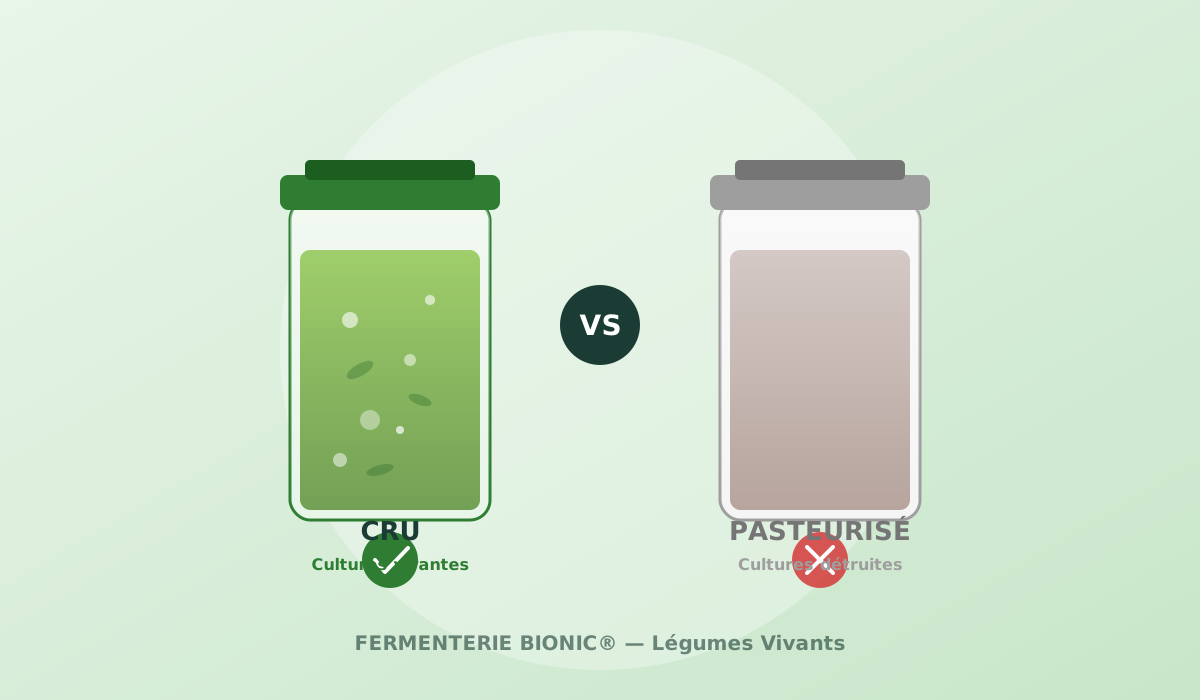
A raw lacto-fermented sauerkraut keeps a far sharper presence. The cabbage stays firm, the acidity is more direct, the sensation on the palate is fresher.
It's a product to use differently: cold, as a finishing touch, in small portions. Where cooked sauerkraut accompanies a hot dish, raw sauerkraut wakes up a plate. It brings contrast, cuts through richness, gives relief to a simple dish.
A few forkfuls are enough.
Cooked sauerkraut vs raw sauerkraut: the table
| Cooked sauerkraut | Raw lacto-fermented sauerkraut |
|---|---|
| Served hot | Served cold |
| Meltingly soft texture | Crunchy texture |
| Softer acidity | Livelier acidity |
| Winter dish | Everyday ingredient |
| Long cooking | Ready to use |
| A base role | A contrast role |
| Often standardised | A living product (if unpasteurised) |
Why BIONIC recommends not cooking its products
Our products are designed to be eaten raw, cold and fresh. Prolonged cooking reduces precisely what makes an unpasteurised lacto-fermented vegetable interesting: the crunch, the freshness, the precise acidity, the identity of the product. (We explain this choice in detail in Unpasteurised product: what it changes.)
This doesn't mean it should be kept away from hot dishes — quite the opposite. The best use is often to place it next to or on top of a hot dish at the last moment. The product warms slightly on contact, without cooking. The contrast remains.
How to serve raw sauerkraut
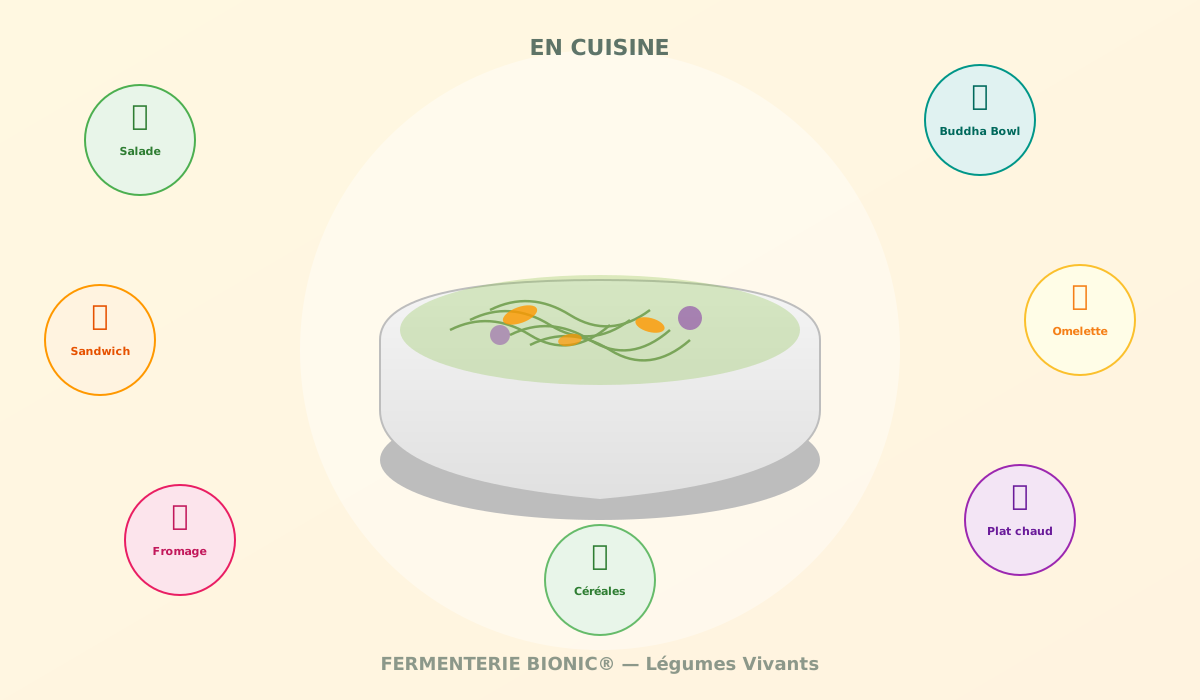
The rule is simple: 1 to 2 forkfuls per plate. Serve it cold, beside the dish, at the end of plating.
It works just as well with a plate of potatoes as with a sandwich, a bowl, a sharing board, roasted vegetables or a cheese tartine. Avoid rinsing it: the juice carries part of the flavour. Simply drain it if you don't want too much liquid on the plate.
For the great Swiss classics — raclette, fondue, air-dried meat, rösti — we have a complete guide: Raclette, fondue, air-dried meat: the best pairings.
Which BIONIC product for a raw sauerkraut?
The natural starting point is the lacto-fermented white cabbage: the reading closest to a classic sauerkraut, in a lively, crunchy version.
If you're looking for more colour and vivacity on the plate, the lacto-fermented red cabbage is an excellent alternative, very striking on a sharing board.
The BIONIC reflex Keep the pouch or jar in the fridge. Take a small portion with a clean fork, add it cold at the end of plating, reseal and return it to the fridge. No recipe, no technique: a fresh touch, that's all.
FAQ
Does raw sauerkraut replace cooked sauerkraut? No. These are two different uses: the cooked version is a hot dish or side, the raw lacto-fermented version is a fresh ingredient to use as a finishing touch.
Can you heat a raw BIONIC sauerkraut? It can accompany a hot dish, but it's better to add it cold or at the end of plating to preserve the crunch.
How much should you use? A small portion is enough: start with 1 to 2 forkfuls per plate.
Is raw sauerkraut unpasteurised? At BIONIC, yes: that's what gives it its freshness and crunch — and that's why it's kept chilled.
In short
Cooked sauerkraut comforts. Raw lacto-fermented sauerkraut wakes things up. At BIONIC, we have chosen the second use: Swiss cabbage worked with precision, kept chilled, unpasteurised, designed for taste, crunch and the everyday table.
To discover the difference, the simplest way is to start with the Discovery Box or to choose a lacto-fermented white cabbage.