Lacto-fermentation: understanding the product, without jargon
Lacto-fermentation explained simply: what happens in the jar, why cabbage, and how to recognise a well-made Swiss lacto-fermented product.
Fermentation is often buried under big words: cultures, living, microbiome, age-old tradition, sometimes even health. In the end, you no longer know what's on your plate.
Let's start again from the beginning, without the complicated vocabulary. What does lacto-fermentation really change in a vegetable? Why is cabbage so well suited to it? Why does the cold matter? And above all: how do you tell a well-made product from one that merely carries the name?
You don't need to be an expert. It comes down to three concrete things: flavour, texture and everyday use.
Lacto-fermentation in one idea
To lacto-ferment is to transform a vegetable with just three ingredients: the vegetable, salt and time. You prepare the vegetable, you salt it, and you let it rest in its own juice, away from the air. Nothing else.
It's not cooking, nor a quick vinegar marinade, nor a sterilised preserve. It's the work of time. The vegetable evolves slowly: its flavour builds, a clean acidity appears, its texture sharpens.
This is exactly the logic behind the BIONIC method: few ingredients, a great deal of attention, and a refusal to take shortcuts.
What really happens in the jar
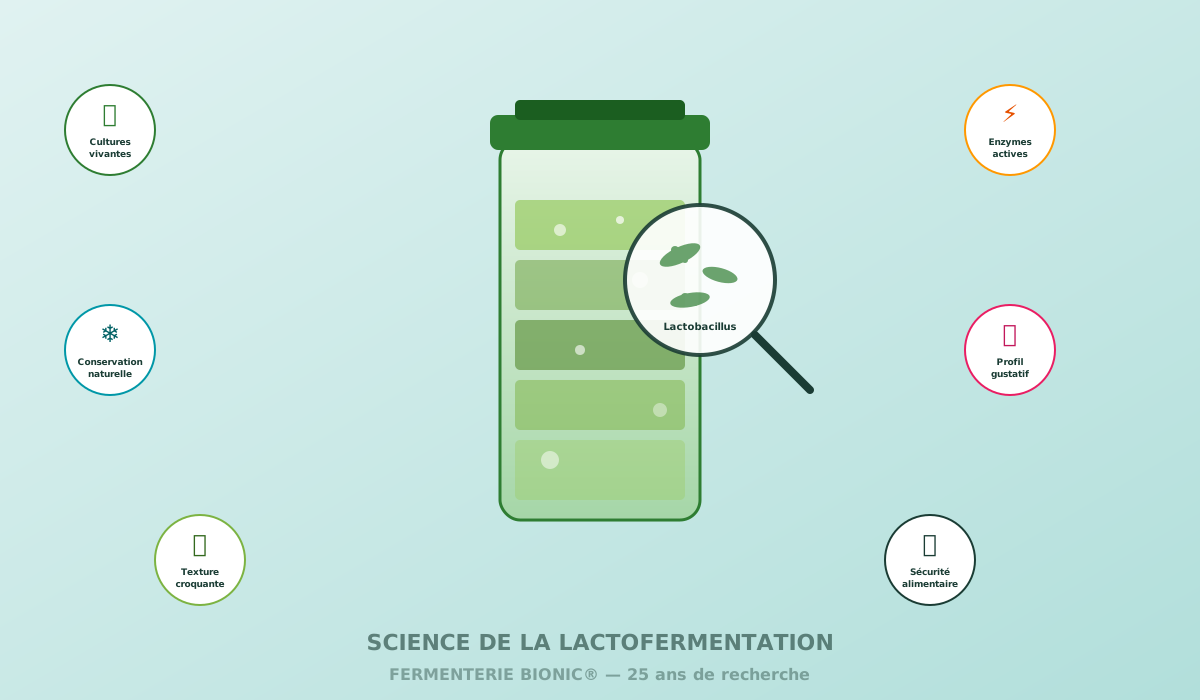
When you salt a vegetable and cut it off from the air, the lactic bacteria naturally present on the vegetable get to work. They consume the vegetable's sugars and produce lactic acid. It's this that gives the bright acidity, structures the flavour and helps the product keep.
Salt, for its part, acts as a safeguard: it steers the fermentation in the right direction and preserves the crunch while time does its work.
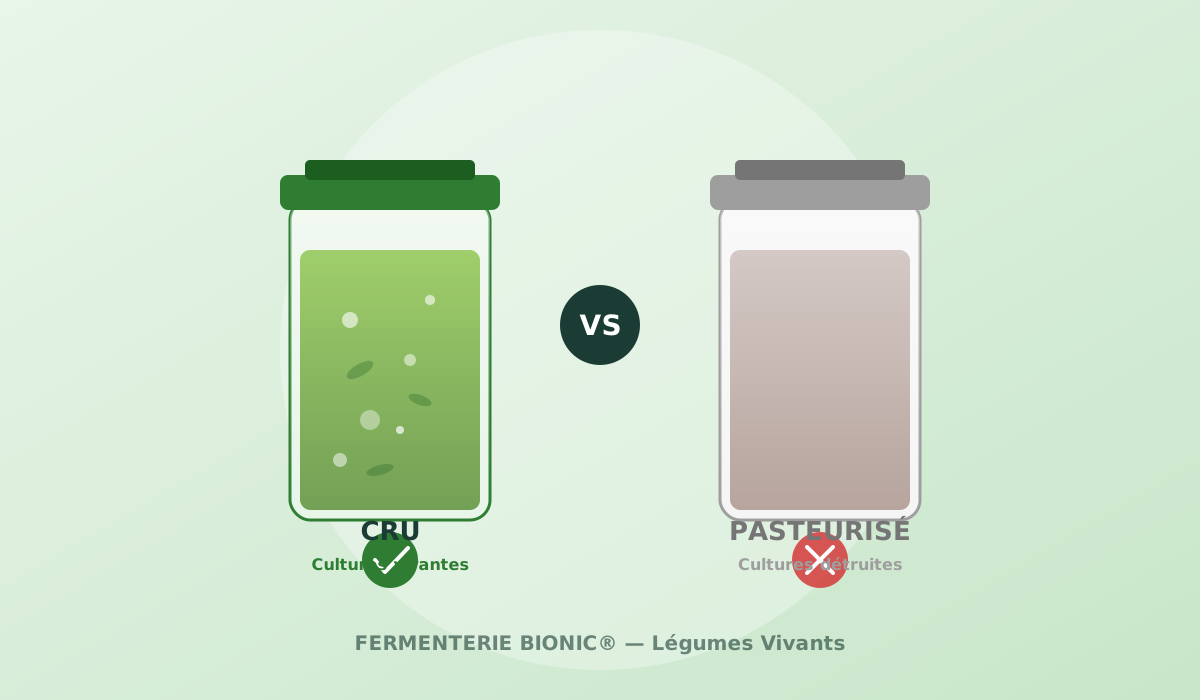
That's all. No magic, no powder, no additive. The "living" so often mentioned simply refers to a product that is unpasteurised — meaning it hasn't been heated to halt its evolution outright — and which is therefore kept chilled. More on that below.
Why cabbage is the ideal raw material
Not every vegetable is equal when it comes to lacto-fermentation. Cabbage is one of the best candidates, and it's no accident that it sits at the heart of our range.
It brings together what's needed:
- a firm structure that holds up well over time;
- a real ability to keep its crunch, even after several weeks;
- a natural affinity with salt;
- a long-standing place in Swiss cooking (sauerkraut, to name just one);
- a rare versatility: it moves from a cold plate to a hot table effortlessly.
Fermentation doesn't turn a mediocre vegetable into a great product. It reveals what the raw material already holds. Hence the importance of choosing the right cabbage — a subject that Nicolas, the founder, sums up in a single phrase: you impose nothing on the product, you accompany it.
What fermentation changes: flavour and texture
Beyond acidity, lacto-fermentation brings depth. The flavour becomes more structured, sharper, with a tension that wakes up the palate. It's precisely this tension that means a small portion is enough: a lacto-fermented vegetable isn't a base, it's an accent.
Texture matters just as much. A good product keeps a presence under the tooth: it shouldn't be soft, tired or vague. This crunch is a signature — it comes from the choice of vegetable, the cut, the monitoring of the fermentation and chilled packaging.
This is also why these products are served cold, as a finishing touch: prolonged heat erases exactly what we set out to preserve. (The detail of the right moves in the kitchen is in our article Cooking with lacto-fermented vegetables.)
Pasteurised or not: why BIONIC keeps it chilled
Many shop-bought fermented products are pasteurised: heated to be more stable and to travel more easily at room temperature. It's convenient for logistics — but the heat softens the texture, rounds off the acidity and freezes the profile.
We've made the opposite choice: not to pasteurise, and to keep the product chilled. The cold isn't a logistical detail, it's part of the product: it keeps the acidity controlled, the crunch and the freshness over time. It's more demanding to produce and to deliver, but that's the price of a product that stays true to what it should be.
We go into this choice in Unpasteurised product: what that changes, and the right habits for keeping it in the fridge in How to store lacto-fermented vegetables.
What lacto-fermentation is not
Let's be clear about it, because the subject is so often muddled: lacto-fermentation is not a health promise.
It isn't a superfood, it isn't a supplement, and our products aren't presented as a miracle solution. At BIONIC, fermentation is first and foremost a food method: a way of transforming vegetables to obtain a product that is good, fresh, crunchy and useful at the table. The rest belongs to another kind of talk, which isn't ours.
How to recognise a good lacto-fermented product
A few simple markers, valid everywhere, not just with us:
- the message is clear (you're told what it is, not given vague promises);
- the storage is specified (kept chilled, a date, simple habits);
- the product has crunch and a controlled acidity, not an aggressive one;
- the ingredient list is short: vegetable, salt, sometimes a few spices;
- the use is obvious — no need for a three-page instruction sheet;
- and the real test: it makes you want to come back to it.
A good fermented product finds its place naturally. If it needs a complicated set of instructions, that's rarely a good sign.
« The BIONIC reflex » Keep the pouch or jar in the fridge. Open it when you need it, take a small portion with a clean utensil, serve cold at the end of plating, close it again, put it back in the cold. That's all. The product should stay simple — that's the whole point.
Want to taste the difference rather than read about it? The simplest way is to start with the Discovery Box: one pouch of each of our four recipes, to compare the profiles and find your fridge essential.
FAQ
Is lacto-fermentation complicated to understand? No. It rests on three things: a vegetable, salt and time, with careful monitoring and chilled storage. The rest is patience.
Why is the product called "living"? Because it isn't pasteurised and is kept chilled. At BIONIC, this word describes the product and the way it's stored — not a health promise.
Why serve the products cold? To preserve the crunch and the fresh acidity. Prolonged cooking erases what makes the product worthwhile. So you add it cold, as a finishing touch, even alongside a hot dish.
Where to start? With the Discovery Box: it lets you taste all four recipes and spot the one that speaks to you, before ordering it singly from the shop.
In short
Understanding lacto-fermentation isn't about stepping into a scholarly vocabulary. It's about grasping that a vegetable can be transformed by salt and time to become more structured, crunchier, fresher — and more interesting at the table.
At BIONIC, it's a way of « doing it right, not complicated »: Swiss cabbage, a precise method, chilled storage, and a product that comes back naturally into everyday life.